- Published on
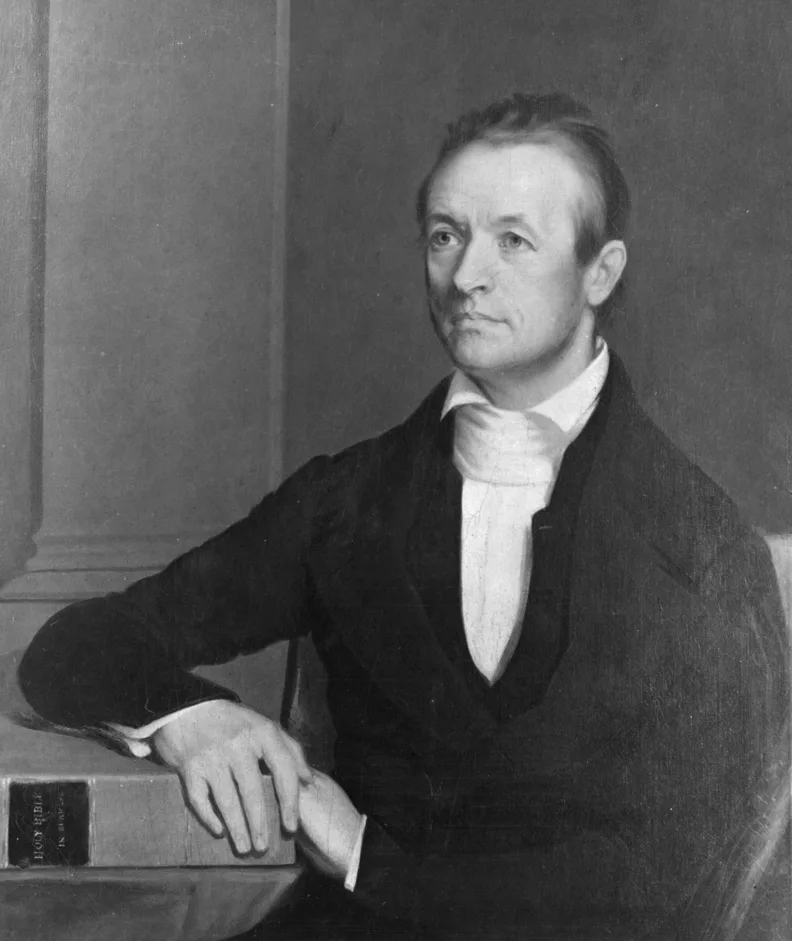
Adoniram Judson
A Giant of the Faith
Adoniram Judson (1788–1850) stands as a monumental figure in the history of global Christianity, remembered primarily for his nearly forty years of sacrificial labor as a missionary in Burma. His life was defined by profound intellectual transformation, unwavering commitment to the Great Commission, and endurance through unimaginable personal tragedy. As one of the first Protestant missionaries sent from North America, Judson’s work—particularly his translation of the Bible—laid the foundational structure for the Christian church in Burma, a nation that today holds one of the largest Baptist populations in the world.
Early Life and Conversion
Born on August 9, 1788, in Malden, Massachusetts, Adoniram Judson was the son of a Congregationalist minister. Displaying intellectual brilliance early on, he entered the College of Rhode Island & Providence Plantations (now Brown University) at sixteen and graduated as valedictorian at nineteen. During his university years, however, he fell under the influence of a fellow student, Jacob Eames, a devout deist and skeptic. This friendship led Judson to abandon his childhood faith and adopt the skeptical philosophy of the French philosophes.
The turning point in his life occurred shortly after graduation. His friend Eames fell violently ill and died at an inn where they were staying. The shock of hearing his friend’s death throes—coupled with the sobering realization that the man who had led him away from his faith was now gone—shattered Judson’s skepticism. He returned to the faith of his youth and, in 1808, made a "solemn dedication of himself to God" while attending Andover Theological Seminary. This conversion sparked a permanent, driving concern for the spiritual state of the lost, which would characterize his entire subsequent ministry.
The Call to Missions
During his final year of seminary, Judson joined a group of mission-minded students known as "The Brethren." Convinced that Asia was the most urgent field for missionary effort, he and his colleagues petitioned the Congregationalist leadership, leading to the formation of the American Board of Commissioners for Foreign Missions (ABCFM) in 1810.
In 1812, Judson married Ann "Nancy" Hasseltine. Shortly thereafter, the couple set sail for India. During the long voyage, Judson engaged in an intensive study of the theology of baptism. His study led him to conclude that believer’s baptism by immersion was the only biblically authorized form. Upon arriving in Calcutta, he and Ann officially adopted Baptist convictions and were baptized by William Ward, an associate of the famed missionary William Carey. This shift in theology necessitated a change in support, leading directly to the 1814 formation of the Triennial Convention, the first national Baptist organization in the United States dedicated to foreign missions.
Life and Ministry in Burma
After being forced out of India by the British East India Company, the Judsons arrived in Burma on July 13, 1813. They faced an environment that was considered "impermeable to Christian evangelism," as the Burmese people were largely devoted to Buddhism, and the government was volatile.
Judson committed himself to absolute mastery of the Burmese language. He spent twelve hours a day with tutors to understand the structural nuances of the language, recognizing that accurate translation was the prerequisite for long-term missionary success. For years, the work was grueling. It took six years of persistent, often ignored effort before he baptized his first convert, a man named Maung Naw, in 1819.
Judson’s ministry was characterized by a balance of intellectual rigor and deep sensitivity to the local culture. He constructed a zayat—a traditional bamboo and thatch shelter—by the roadside to engage passersby in conversation. He avoided confrontational "anti-Buddhism," choosing instead to present the Gospel as a rational and authoritative truth.
Years of Darkness and War
The mission was severely tested during the First Anglo-Burmese War (1824–1826). The Burmese government, suspecting foreign missionaries of being British spies, arrested Judson. He endured 17 months of brutal imprisonment, during which he was bound with torture thongs and marched through the jungle in horrific conditions.
Throughout this ordeal, Ann Judson worked tirelessly to petition for his release and provide him with food and aid, all while caring for their newborn daughter, Maria. Upon his eventual release, the toll of the war and imprisonment had been devastating. Ann, who had also been sickly, died shortly after his release, followed soon by their child.
Judson was plunged into deep despair following these losses, at times retreating into the jungle as a recluse and questioning his calling. However, as Daniel Akin notes, he eventually emerged from this "valley of the shadow of death" relying on the strength of his faith. He returned to his work with renewed vigor, ultimately completing the translation of the entire Bible into Burmese in 1834—a project that had occupied twenty-four years of his life.
Later Years and Legacy
Judson’s capacity for endurance remained constant. He married twice more: first to Sarah Hall Boardman, a widow and fellow missionary, and later to the author Emily Chubbuck. Both women were essential partners in his ministry, and their personal sacrifices were integral to the survival and growth of the mission.
In his later years, Judson’s health failed. He developed a serious pulmonary illness, and on April 12, 1850, he died at sea while traveling in the Bay of Bengal. He was buried in the ocean, having spent nearly four decades away from his home country.
At the time of his death, the fruit of his labor was evident: there were 100 churches in Burma and over 8,000 believers. His legacy, however, extends far beyond his lifetime:
- Bible Translation: His translation of the Burmese Bible remains the most widely used and respected version in Myanmar today.
- Linguistic Contribution: He compiled the first Burmese-English dictionary, providing a scholarly foundation for all subsequent linguistic work in the region.
- Missionary Model: The letters written by his wife Ann, documenting their struggles and faith, moved thousands in the West to support the missionary cause, cementing Judson's role as a pioneer of the modern missionary movement.
- Institutional Growth: His work led to the creation of the Triennial Convention, which spurred the growth of American Baptist organizations. Numerous institutions, including Judson University in Illinois and various programs at theological seminaries, bear his name in honor of his dedication.
Adoniram Judson’s life was not one of fame-seeking, but one of profound submission. He viewed himself as a precursor to those who would follow, stating, "It is possible that my life may be spared; if so, with what ardor and gratitude shall I pursue my work; and if not, His will be done; the door will be opened for others who will do the work better". By sacrificing his comfort, his family, and his own life, he opened a door that has remained open for generations, leaving behind an enduring witness to the power of the Gospel.
Understanding the Impact
The life of Adoniram Judson raises a profound question regarding the nature of Christian commitment in the face of suffering: Surely through Judson’s ability to "emerge from the valley of the shadow of death" he must have influenced and encouraged the resilience of the early Burmese church he helped establish.